Risograph Printing: The Indie Publisher’s Cult Weapon
February 10, 2025 · 3 min read
The Risograph is a Japanese duplicator machine manufactured by Riso Kagaku Corporation, originally designed for cheap, fast document copying in offices and schools. It works by burning a master stencil from your artwork and pushing soy-based ink through it onto paper — one color at a time, with rough registration, variable ink density, and beautiful imperfection.
It is also the cult obsession of independent publishers, zine makers, illustrators, and small print studios worldwide, and for good reason.
What Makes Risograph Printing Distinctive
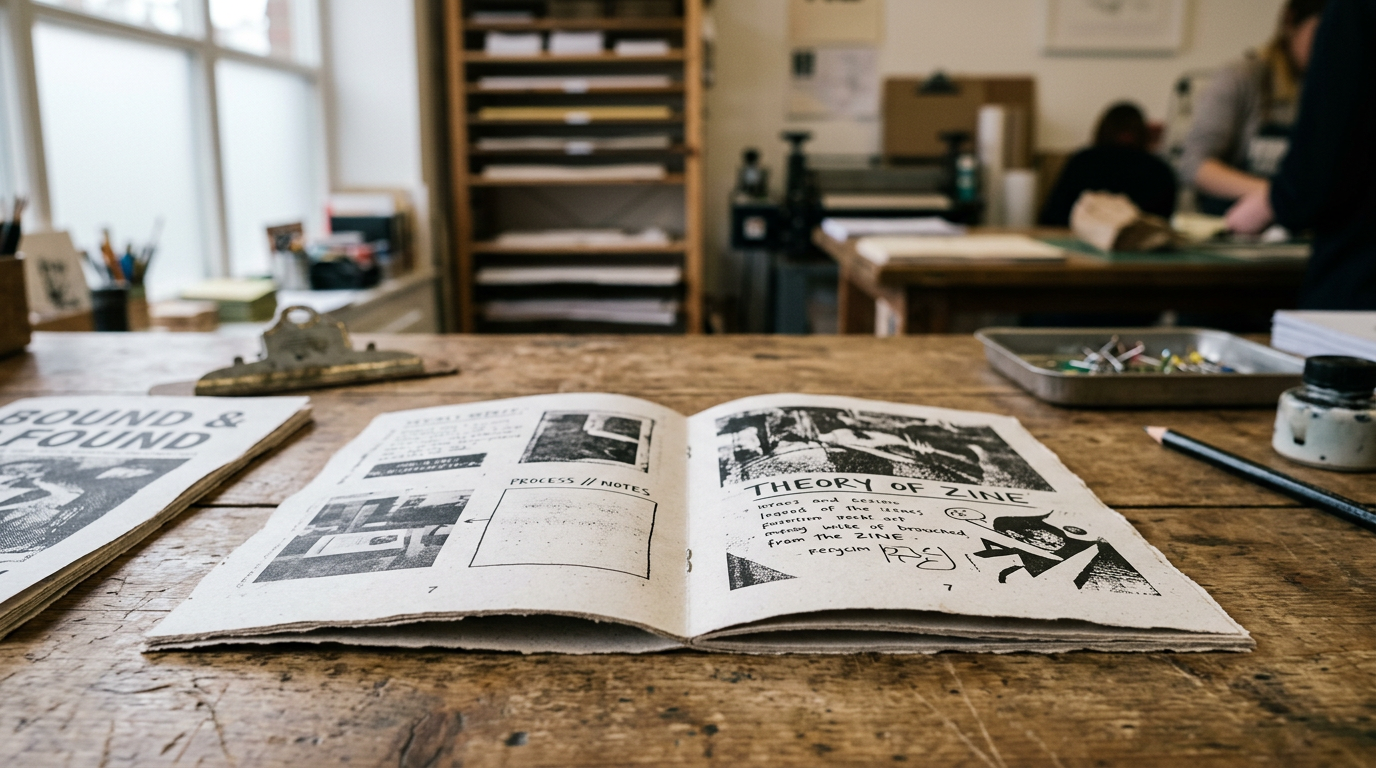
The aesthetic qualities of Risograph printing are inseparable from the machine’s limitations. Because each color prints separately and registration is mechanical rather than digital, colors never align perfectly — producing a slight offset between layers that becomes a visible part of the design. Where colors overlap, they mix optically in ways that are partly predictable and partly not. Ink coverage is inconsistent: you’ll see the texture of the paper through the ink, and density varies across a single printed sheet.
For most printing applications, these would be defects. For Risograph, they’re the point. The prints have a visual energy and physicality — a sense of having been made — that clean, perfect digital printing can’t produce. The color palette is limited to Riso’s range of premixed ink drums (roughly 20 standard colors), which forces creative constraint. The most interesting Riso work treats the machine as a collaborator rather than a tool.
The Practical Economics
Risograph’s appeal isn’t just aesthetic. For short to medium print runs — 50 to 2,000 copies — it’s genuinely economical. Setup costs are low compared to offset lithography, and the per-copy cost at moderate runs is competitive. For zines, chapbooks, art books, small magazines, and event programs, Riso makes short-run color printing viable in a way that digital printing can’t quite match (the tactile quality) and offset can’t (the economics at low volume).
The machines themselves — typically SF series or EZ series Riso duplicators — can be acquired used for $500–$3,000 depending on condition. Ink drums run $40–$80. Paper is standard bond. The cost-per-print on a two-color zine at 500 copies is well under $0.50, making projects economically viable that couldn’t exist on press.
Setting Up for Riso Success
Designing for Risograph requires a different mindset than designing for offset or digital output. You’re working in spot colors, separating your artwork into layers by color. You have to think about how colors will interact when they overlap — whether you want them to mix, to knock out, or to trap. You have to design with paper grain and ink bleed in mind.
The essential preparation steps:
Design in CMYK but convert each color to a Riso ink match before finalizing artwork
Prepare separate files or layers for each color, in grayscale, with 100% black representing full ink coverage
Build in intentional registration variation — if your design depends on perfect alignment, it will disappoint you
Test on your exact paper stock before committing to a run — paper weight, texture, and absorbency all affect the result significantly
Embrace surprises — some of the best Riso work happens when the machine does something you didn’t plan
Where to Get Work Riso-Printed
If you don’t have access to a machine, dozens of independent Riso print studios offer short-run printing services. In the US, notable studios include Perfectly Acceptable Press (Columbus), Colour Code (Brooklyn), and Knust Press (Portland). Most accept files remotely and ship finished prints. The Riso community is unusually collaborative — many studios offer consultation to help first-time clients prepare files correctly.
Risograph printing rewards experimentation and punishes perfectionism. If those terms sound appealing to you, you’ve found your medium.