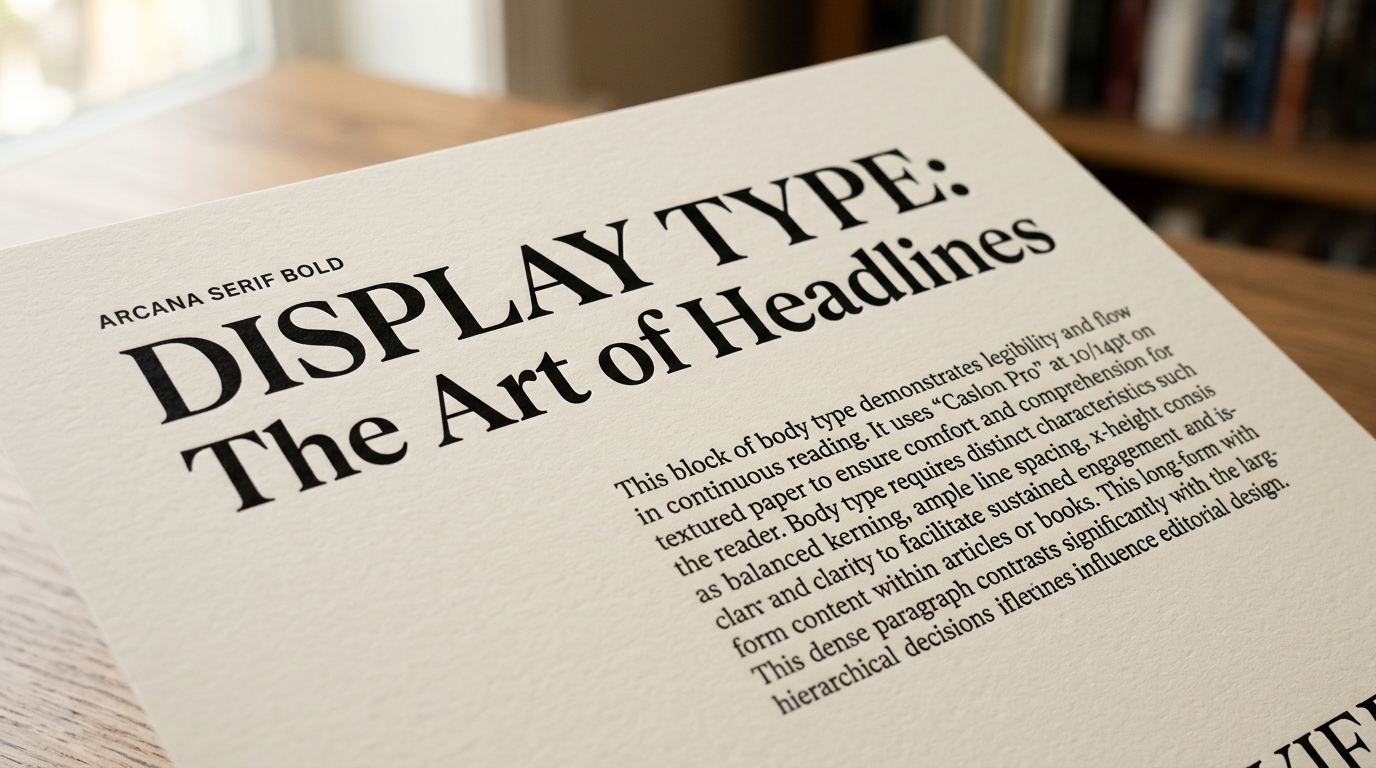
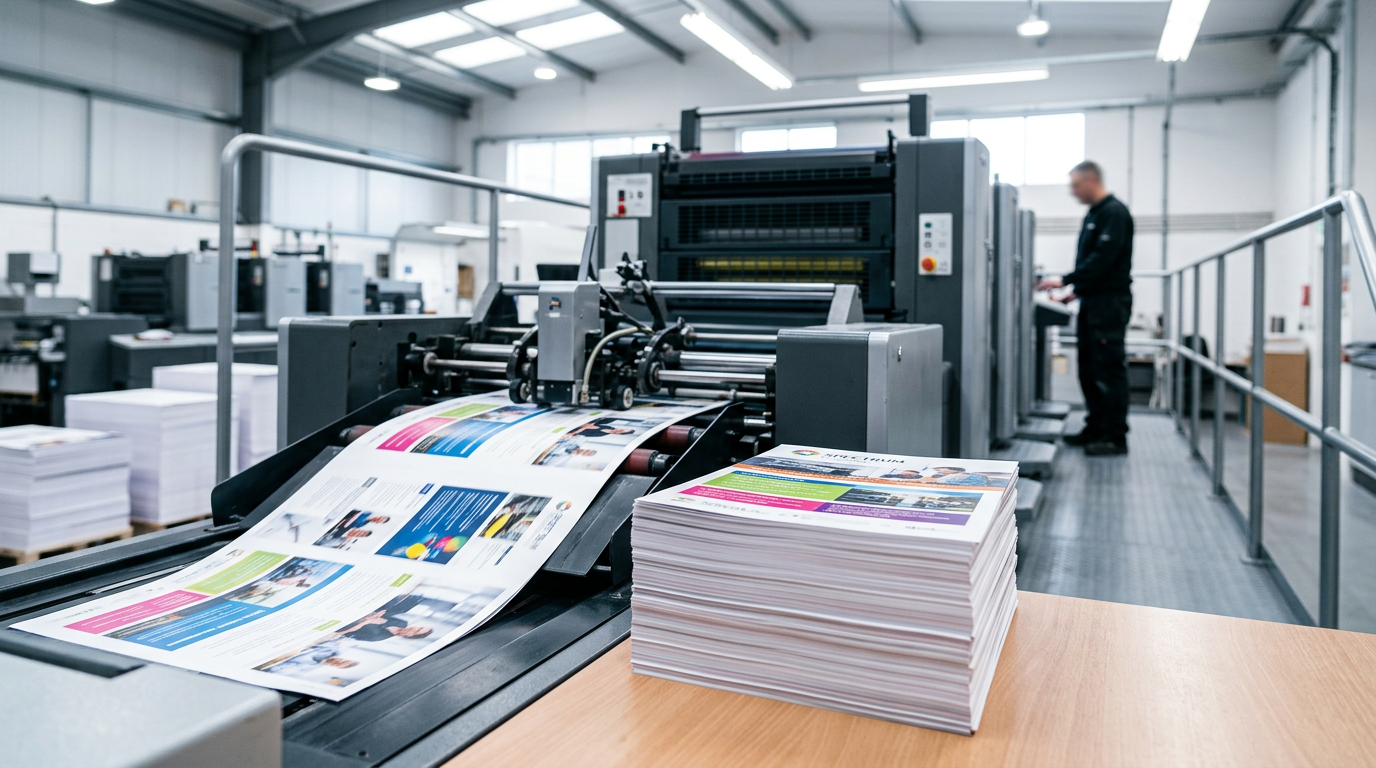
Paper is not a neutral substrate. The sheet you print on is as much a part of the design as the typeface, the color, the layout. A beautifully designed brochure on cheap uncoated offset paper communicates something different — and lesser — than the same design printed on a premium uncoated sheet. A bold poster that looks powerful on newsprint might look garish on coated gloss. Paper choice is a design decision, not an afterthought.
Most designers don’t think about paper enough. This guide is an attempt to change that.
Understanding Paper Categories
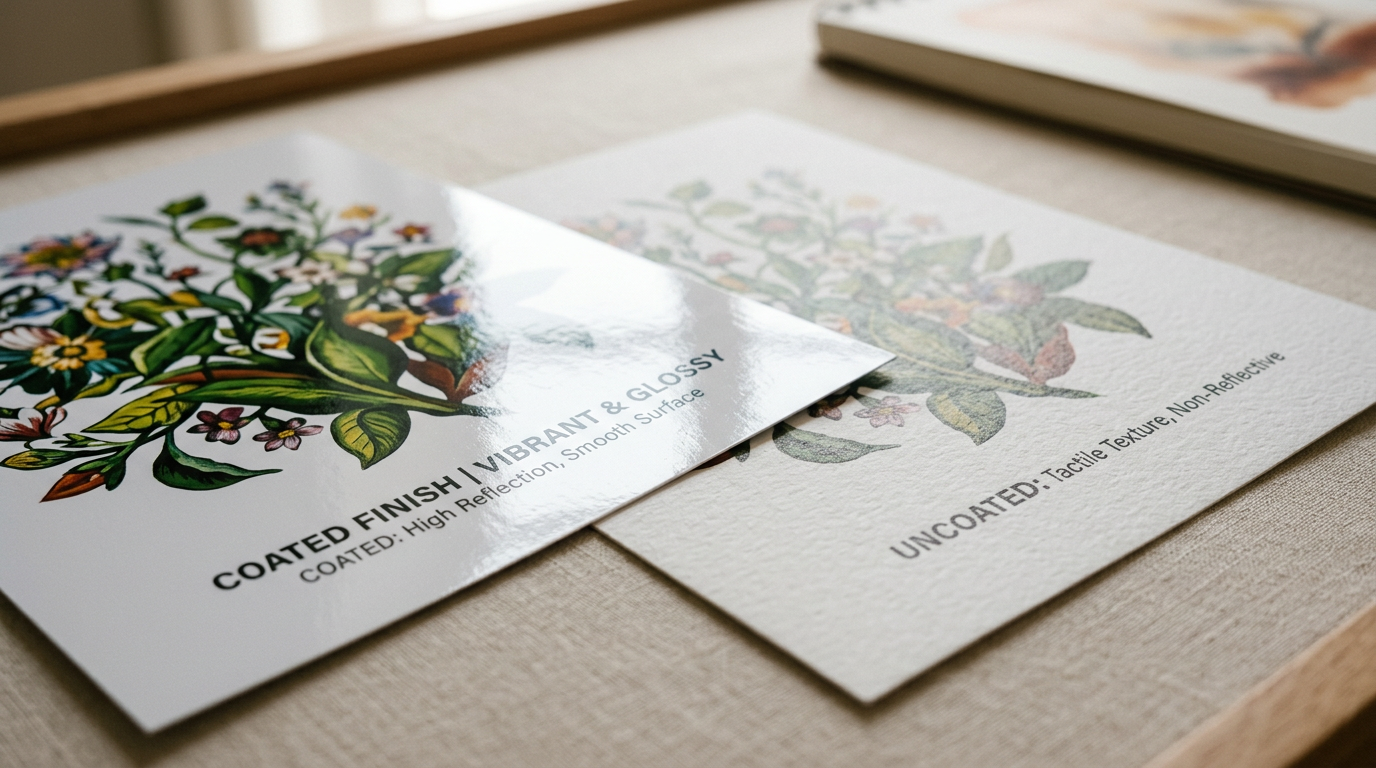
Coated vs. Uncoated: The most fundamental distinction. Coated papers have a clay-based surface applied over the base sheet, which creates a smoother surface, reduces ink absorption, and allows finer halftone reproduction and more vibrant color. Uncoated papers are more porous — ink sits in the fibers rather than on the surface — producing softer color, a more tactile texture, and a less “commercial” feel.
Coated papers come in three finishes: gloss (maximum color vibrancy, shiny surface), satin/silk (slightly matte surface, good color reproduction, less glare), and matte (flat surface, excellent readability, less color intensity). Uncoated papers range from smooth to rough, with texture that significantly affects both print quality and tactile experience.
Weight: Paper weight in the US is measured in pounds (lb) for text-weight paper and cover-weight paper, and these two scales are separate — an 80lb cover sheet is significantly heavier than an 80lb text sheet. In Europe and internationally, weight is measured in grams per square meter (gsm), which is a single, universal scale. Standard magazine text pages are typically 70–100lb text (100–150gsm). Business cards and covers are typically 80–130lb cover (216–350gsm).
Matching Paper to Project
For magazines and publications: Uncoated text-weight paper reads better and feels more considered than coated alternatives for text-heavy content. A warm white or natural white tint reduces eye strain on long reads. For image-heavy sections or covers, a satin or silk coated sheet provides better color reproduction without the visual noise of gloss.
For business cards: This is where paper choice becomes a tactile brand statement. A 130lb uncoated cover stock with letterpress or foil printing communicates entirely differently than a 14pt gloss coated card with UV coating. Neither is wrong — but they’re not interchangeable. Consider: what does the card feel like in someone’s hand? What does that feeling suggest about your brand?
For posters: Uncoated papers — particularly text-weight sheets with visible texture — give posters a more hand-crafted, analog quality. Coated papers produce sharper photographic reproduction but often feel more commercial. Newsprint — cheap, fast-degrading, environmentally complex — has its own aesthetic power that has made it a design choice as much as a cost-cutting measure.
For packaging: Structural requirements dominate — the paper needs to do a job. But surface finish, texture, and substrate choice still communicate brand values. A craft board surface signals natural and artisanal. A high-gloss laminated surface signals consumer premium. A matte soft-touch laminate signals luxury restraint.
Specific Papers Worth Knowing
French Paper Company’s Speckletone: Recycled uncoated paper with visible fiber flecks. Immediately communicates craft, environmental values, and a certain indie aesthetic. Used heavily in indie publishing and letterpress work.
Mohawk Superfine: The benchmark uncoated premium text and cover paper in North America. Consistent, beautiful, available in multiple tints and weights. The default choice when you want uncoated quality without surprises.
Neenah Classic Crest: Another premium uncoated option, excellent for stationery and correspondence. The Natural White shade is particularly good for text-heavy work.
Sappi McCoy: A coated silk/satin sheet with excellent color reproduction and a feel that works for publications where you want some coated quality without going full gloss. Widely available and reliable.
Getting Paper Samples
The single best thing you can do to improve your paper decision-making is to build a sample library. Most major paper merchants and manufacturers will send free swatch books on request. Hold the paper. Fold it. Feel the difference between weights and finishes. Print your own test files on different sheets at your local print bureau. The difference between papers that look similar on a specification sheet is often dramatic in person.
Paper knowledge accumulates slowly, through experience and touch. Start building that knowledge now.