Making a zine moves through four main phases: ideating, assembling, copying, and distributing. This guide covers each phase in order, along with the two core constraints — page count and reproduction method — that shape every decision you make along the way. By the end, you’ll have enough information to plan your zine from concept to finished copies ready to share.
The Four-Phase Process: Concept to Finished Copies
The steps below run in sequence, and the sequence matters. Distribution is treated here as a required production phase, not an afterthought. Deciding how you’ll distribute before you copy determines how many copies to make and in what format.
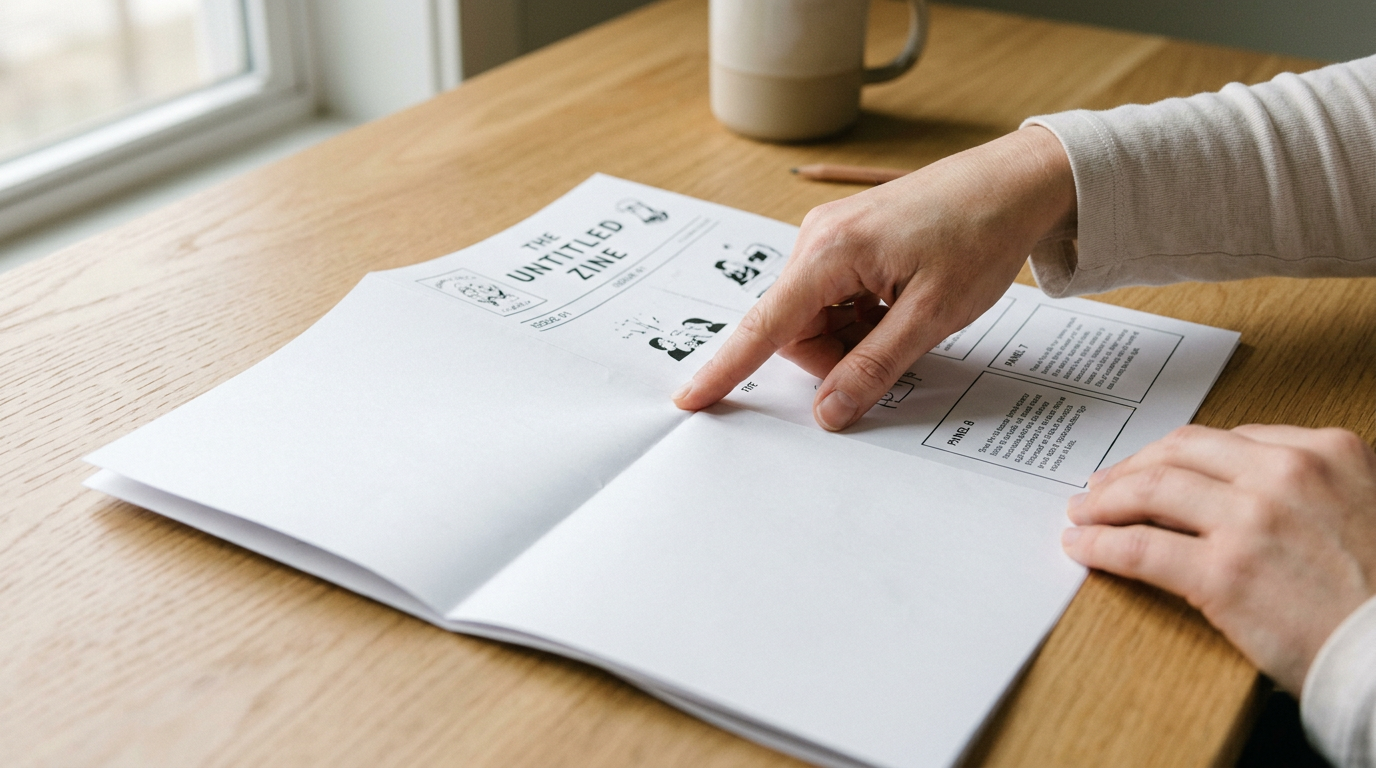
Plan your concept and page count. Decide on your subject, audience, and total page count. Zines must run in multiples of four. For first-time makers, the 8-page single-sheet format is the standard starting point: one sheet of paper, folded and cut, produces eight pages with no additional materials required.
Design your layout for black-and-white reproduction. Build each page using contrast, shapes, patterns, and image placement instead of color. Work within black-and-white constraints from the start. Color decisions made before this step won’t survive photocopying or scanning.
Assemble the pages. Arrange pages in the correct order based on your fold-and-cut method, then collate and bind. For multi-page zines, saddle stitching (stapling through the folded spine) is the most common binding method. Single-sheet formats don’t need binding.
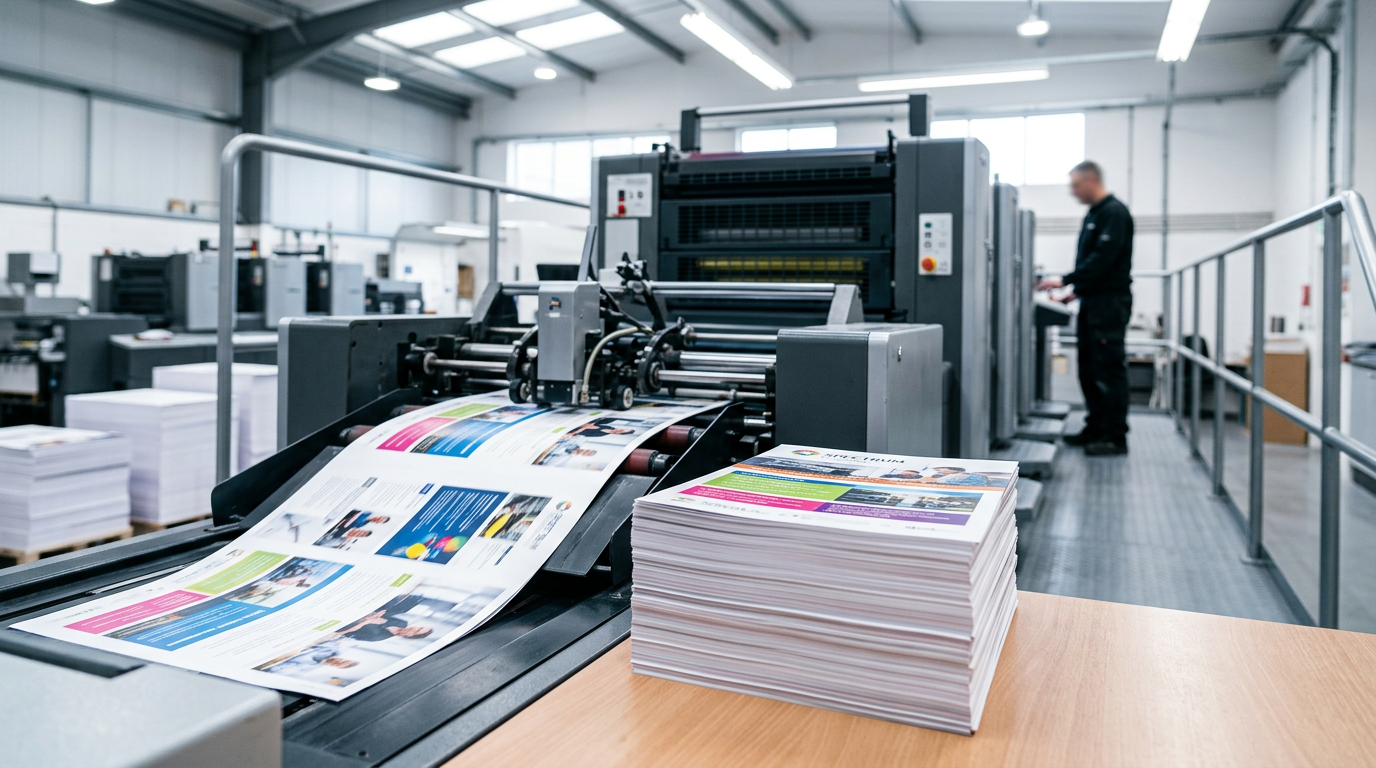
Copy your zine. Reproduce your master copy using photocopying for direct physical output, or scanning to generate a digital file for batch printing or online distribution. Both methods work fine. The choice depends on how you plan to distribute.
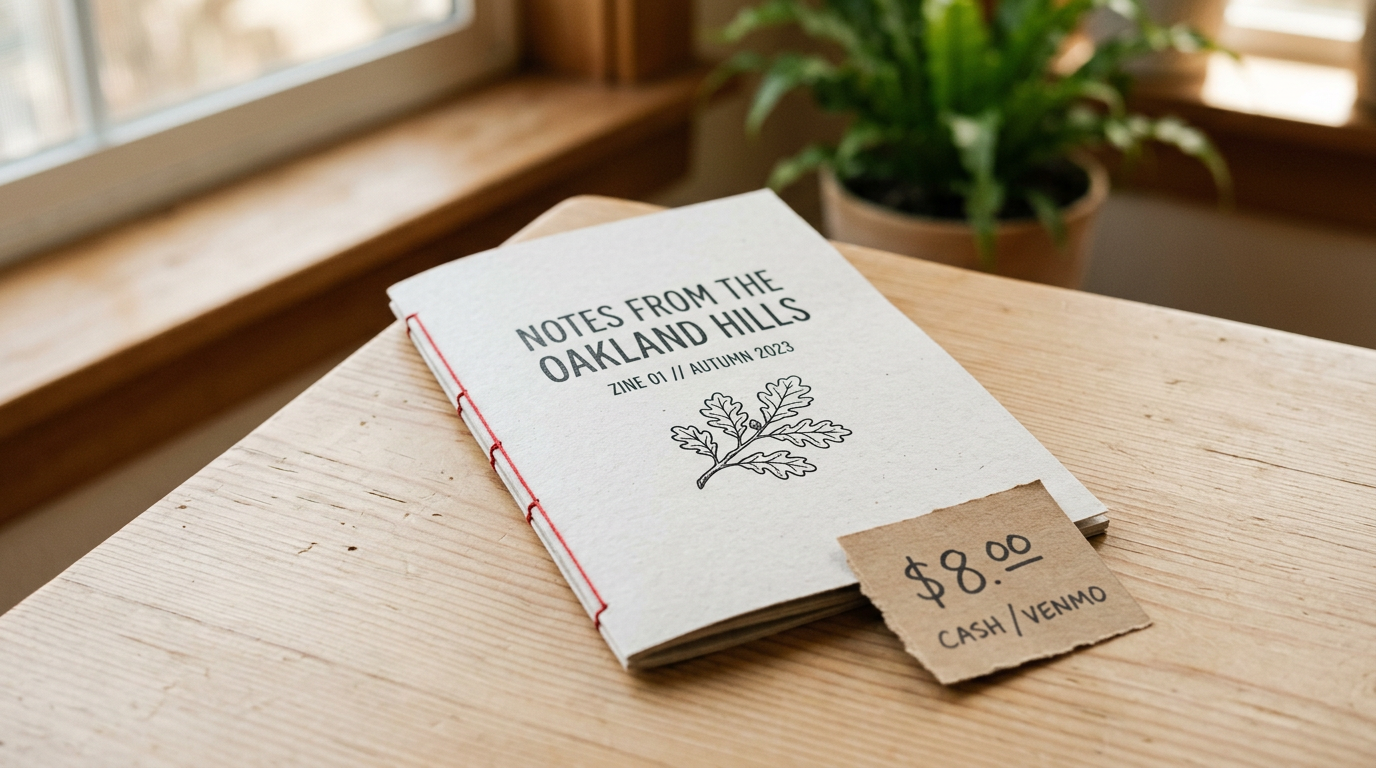
Distribute your zine. Physical copies can go to local shops, libraries, zine fests, or direct trades. Digital files can be shared via email, posted to zine platforms, or distributed through social media. Plan your distribution channel before copying begins so your reproduction method matches your output format.
Why Page Count, Black-and-White Design, and Distribution Order Are Non-Negotiable
Each of these three constraints causes real problems if you ignore them. The multiple-of-four page count rule is a physical constraint imposed by folding, not an aesthetic convention. If you discover a page count problem mid-layout, you have to redesign the entire sequence. Designing in color before accounting for reproduction is just as costly: washed-out contrast, lost detail, and unreadable text are layout failures that only show up at the copying stage, after the master is already complete. And treating distribution as optional is why most first-time makers stall between assembly and finished copies. The distribution decision determines both the reproduction method and the copy count, so it has to come first.
Page Count, Format, and Binding: How Each Decision Affects the Next
The 8-page single-sheet format is the standard structural starting point: one sheet folded and cut produces eight sequentially ordered pages. Because the fold-and-cut method determines page order, you need to map the page sequence before placing any content. Layout errors at this stage mean starting over.
Choosing a higher page count (12, 16, or more) gives you more room for content but requires multiple sheets, collating, and binding, which adds assembly time and increases per-copy reproduction cost. Saddle stitching (stapling through the folded spine) only applies when multiple sheets are collated into a booklet. Single-sheet fold-and-cut zines hold together through folding alone. Applying saddle stitching to a single-sheet format adds unnecessary steps and changes the physical structure of the finished zine.
Black-and-White Layout Design for Photocopying and Scanning
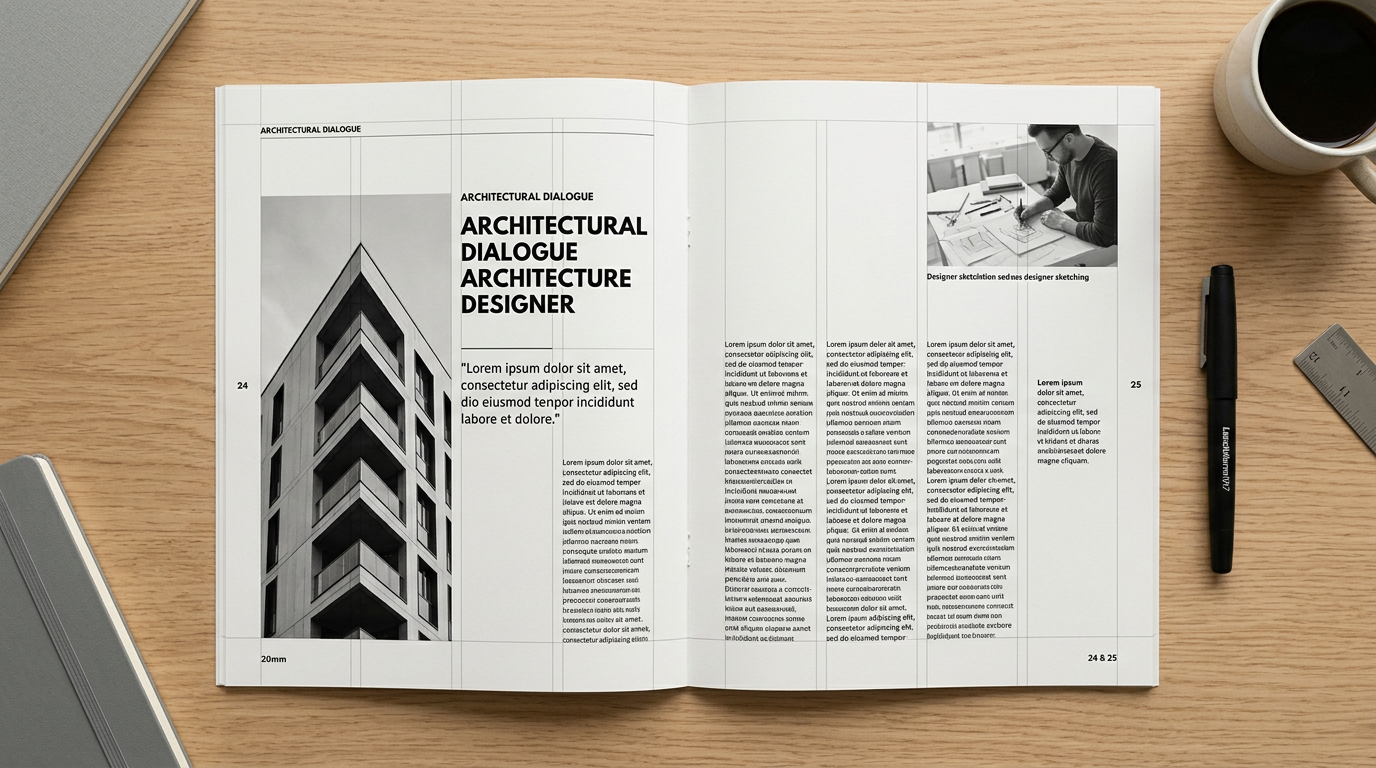
Layout for zines is a composition problem defined by reproduction method. High-contrast arrangements, bold shapes, dense patterns, and deliberate image placement carry the visual weight that color would otherwise provide. Design with the final photocopied or scanned output in mind, not the original.
The reproduction method also affects which layout details survive. Photocopying rewards high-contrast originals with clean line weights. Fine detail and gray tones degrade across generations of copies. Scanning preserves the original fidelity in a digital file, which means layouts with finer detail or halftones can survive if the final output is printed from that digital file rather than copied from a physical master. If pages aren’t reproducing cleanly, contrast and composition adjustments at the layout stage will fix most copying failures before they happen.
Physical Distribution, Digital Distribution, and When to Use Each
Reproduction method and distribution channel are linked decisions. Use photocopied physical distribution when your audience is local (zine fests, shops, or direct trades) and you need multiple identical copies from a single master. Use scanning and digital distribution to reach a wider audience without per-copy reproduction costs, or when physical printing isn’t accessible.
When producing entirely digitally, design tools replace hand-assembly and the copying step becomes exporting, typically to PDF. Distribution moves to platforms like zine databases, personal sites, or direct file sharing. The four phases still apply. Only the reproduction and distribution methods change.
Choosing Your Starting Point: Format and Reproduction Method
The 8-page single-sheet template is the right starting point if you want the fastest path from concept to finished physical copy with no binding required. If your pages aren’t reproducing cleanly from an existing format, fix contrast and composition at the layout stage before copying again. If physical printing isn’t accessible or you want to reach readers beyond your immediate area, scanning and digital distribution are fully valid alternatives, not workarounds.
Start with Page Count and Distribution, Then Design
Page count and distribution method are the two decisions that unlock everything else. One tells you whether you need binding; the other tells you whether to photocopy or scan. Get those right first, and the rest of the process follows naturally. For most first-time zine makers, that means an 8-page single-sheet format and a clear sense of how copies will reach readers. It’s a simple starting point worth exploring in more detail here.