Zine vs magazine is a comparison that comes up a lot for anyone exploring independent publishing or trying to figure out which format fits their project. This page breaks down the real differences between zines, magazines, and artist books, covering production methods, circulation, commercial intent, and cost. By the end, you’ll know enough about each format to pick the one that works for what you’re trying to do.
What Defines a Zine, a Magazine, and an Artist Book
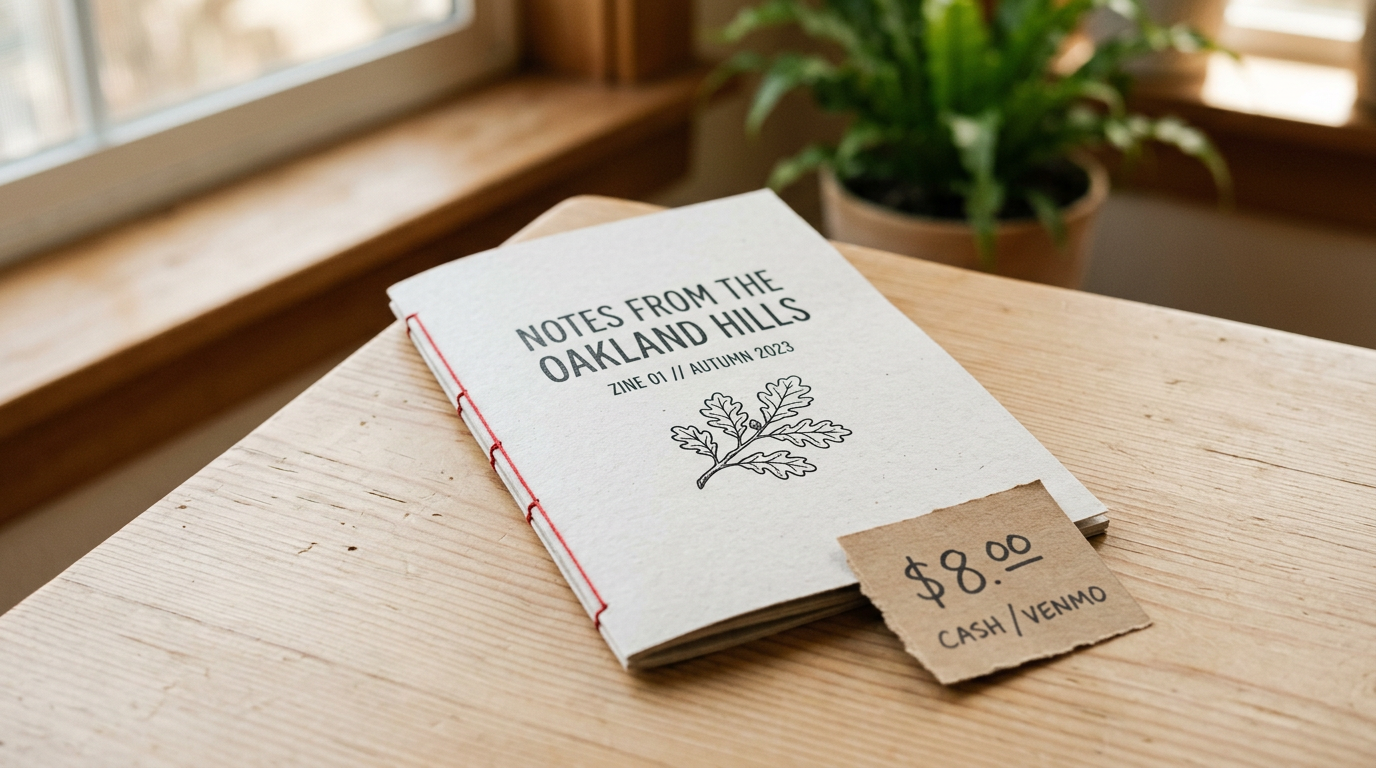
A zine is a self-published, non-commercial publication made by one person or a small group, usually through low-cost methods like photocopying or home printing, and shared in small runs through personal networks, zine fests, or independent distros. Zines carry no advertising revenue and are priced, if at all, only to cover printing costs.
A magazine is a professionally produced periodical built around advertising revenue and commercial distribution, aimed at a broad or well-defined mass audience. Magazines have editorial and production teams, carry significant production costs, and are designed to make money through ad sales and subscription or newsstand pricing.
An artist book is a publication where the physical object itself is the artwork. It’s made with deliberate craft, often at higher cost, and sold or shown through galleries, art book fairs, or institutional collections. Artist books aren’t commercial in the advertising sense, but they carry higher price points that reflect their status as art objects rather than periodicals.
Why Appearance Alone Won’t Tell You the Format
The line between a zine and a magazine isn’t always visible from the object itself. The real difference is structural: whether a publication is built around advertising revenue and mass distribution, or around creator-driven, non-commercial production. Artist books are included here because they’re often mistaken for high-production zines or niche magazines. But the difference comes down to how the creator frames the work and where it’s distributed, not print quality. You can’t tell the format just by looking at it.
How Production Method, Commercial Intent, and Circulation Scale Separate the Three Formats
Magazines need commercial infrastructure: advertising sales, professional production teams, and mass distribution networks. Zines and artist books don’t involve any of that. Zines are made at minimal cost through DIY methods. Artist books carry a higher production investment that reflects their status as art objects. Both zines and artist books are non-commercial in intent, while magazines are structurally dependent on advertising revenue. A publication without ad revenue and without mass circulation intent isn’t a magazine, regardless of how it looks.
Creator identity also varies in scale. Zines and artist books are made by individuals or small groups. Magazines involve professional editorial and production teams. Circulation scale is one of the clearest practical dividing lines: zines circulate in runs of tens to a few hundred copies through community-based channels, while magazines target broad or mass audiences through commercial distribution.
Art Zines, Periodical Zines, and Digital Zines
These distinctions hold across format variations, though each raises its own edge cases worth knowing.
An art zine sits closer to the artist book end of the spectrum than a standard zine, with more deliberate visual design and sometimes higher production quality. But it still has the non-commercial, self-published identity of a zine. What separates it from an artist book is primarily framing: art zines are distributed as zines, not exhibited or sold as art objects.
Some self-publishers put out recurring issues with consistent branding and a defined editorial voice, mimicking magazine structure while staying non-commercial and DIY in production. The format looks like a magazine on the surface but has no advertising revenue, no professional production infrastructure, and no mass circulation.
A digital zine keeps all the defining traits of a zine: self-published, non-commercial, small-circulation, creator-driven. It just exists entirely in digital form. Production cost drops to near zero, and distribution shifts to direct sharing or free download rather than physical distro networks.
When the Zine-Magazine-Artist Book Distinction Has Practical Consequences
These distinctions matter in several concrete situations. If you’re deciding which format to create, production cost and commercial intent will tell you whether your project is a zine, a magazine, or an artist book before a single page is printed. If you’re trying to categorize a publication you’ve come across, the physical format won’t tell you much. You need to check for advertising revenue, print run scale, and distribution context. In library or archival settings, zines, magazines, and artist books are catalogued differently and held in different collections based on these structural differences. And when figuring out whether a self-published periodical is a zine or crosses into magazine territory, the presence or absence of commercial infrastructure is what decides it, not the publication schedule or visual polish.
Format Identity Is Determined by Structure, Not Shelf Appearance
Production method, circulation scale, commercial intent, and cost are the four things that reliably separate magazines, zines, and artist books from one another. What’s easy to miss is that the physical object often misleads: a beautifully printed zine is still a zine, and a cheaply produced artist book is still art. If you want to explore these formats hands-on, browsing a zine fest or art book fair is the most instructive place to start.